SiEnE and the Si MoD Launch European Strategic Dialogue on Energy Resilience as a Key Defence Capability
SiEnE and the Si MoD Launch European Strategic Dialogue on Energy Resilience as a Key Defence Capability
- Details
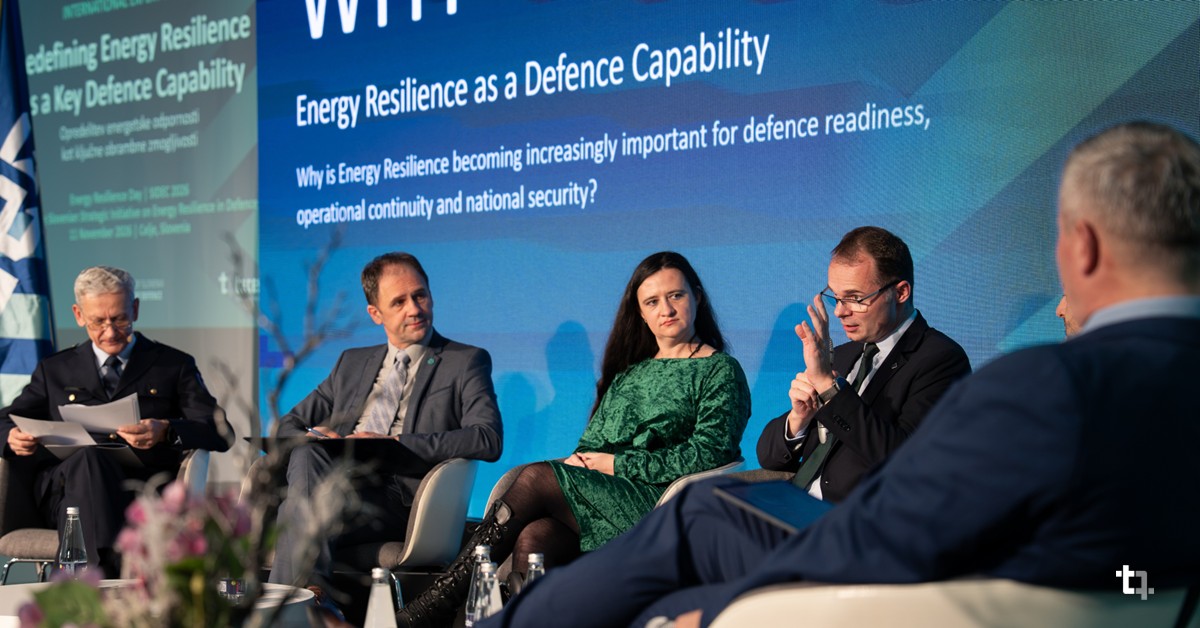
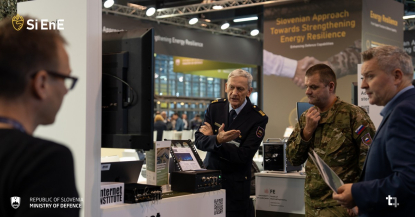
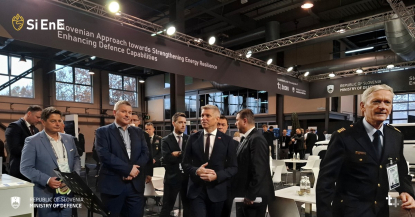
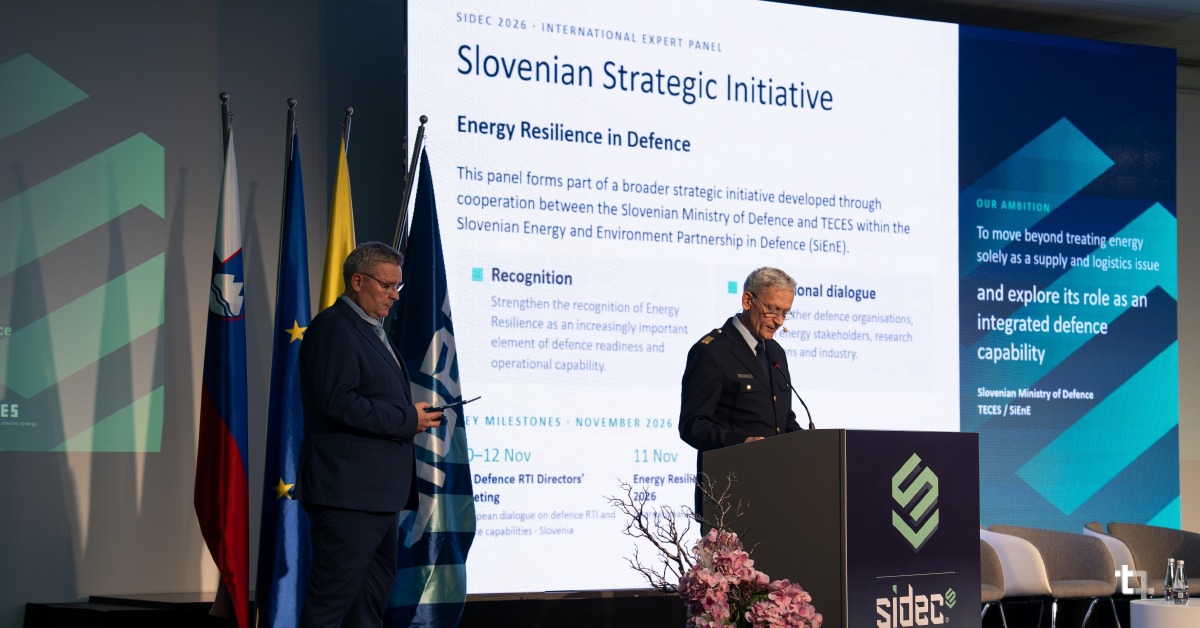
The SiEnE partnership, established and jointly coordinated by TECES and the Ministry of Defence of the Republic of Slovenia (Si MoD), initiated an important strategic dialogue on the role of energy resilience in the European defence landscape as part of Energy Resilience Day at the international defence exhibition SIDEC 2026.
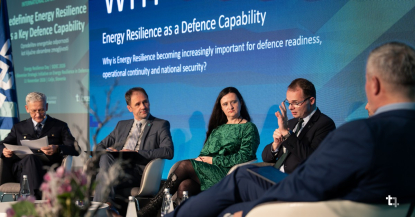
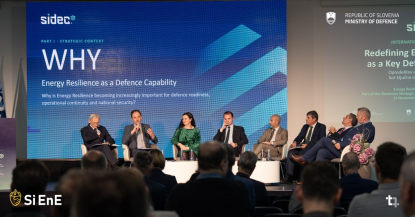
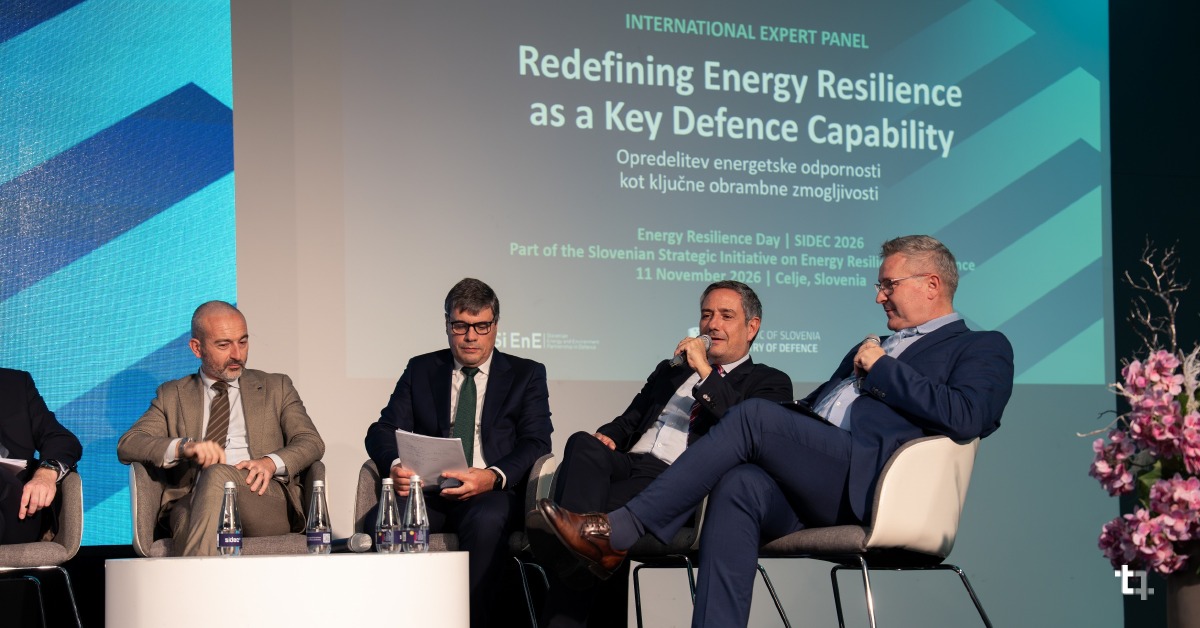
The international expert panel “Redefining Energy Resilience as a Key Defence Capability”, held on 11 November 2026 in Celje, brought together representatives of national institutions, the European Defence Agency (EDA) and the European defence industry.
The central message of the discussion was that energy resilience is no longer merely a matter of energy supply and logistics. It is becoming a critical defence capability that directly affects operational readiness, the autonomy of armed forces and European strategic sovereignty.
The initiative aims to translate strategic dialogue into tangible European cooperation, establish shared development priorities, and develop and test operationally viable energy solutions in collaboration with the European Defence Agency, research organisations and industry.
From strategic dialogue to tangible defence capabilities
The international expert panel was moderated by Colonel Robert Šipec, Head of the Energy Efficiency and Green Transition Sector at the Ministry of Defence of the Republic of Slovenia, and Matej Gajzer, MSc, Director of TECES and President of the SiEnE partnership.
The discussion centred on three key questions: why energy resilience is becoming a critical defence capability, which technologies and operational solutions are needed, and how European cooperation can accelerate their development and deployment.
The six international experts emphasised that modern armed forces, increasingly dependent on digital technologies, communications, military mobility and other critical systems, require resilient, autonomous and interoperable energy solutions.
Civil and defence energy resilience as a foundation for security and operational readiness
The importance of resilient European energy infrastructure, diversification of energy sources and the integration of civil and defence energy requirements was highlighted by Dr Tomaž Žagar, State Secretary for Energy at the Ministry of Infrastructure and Energy of the Republic of Slovenia. He noted that the interconnected nature of European energy networks is a significant advantage, enabling countries to respond more effectively to disruptions. He also stressed the importance of cyber security, autonomous system operation and rapid recovery following major outages.
The direct impact of energy resilience on military logistics, the safety of military personnel and operational readiness was highlighted by Michał Wierciński, Deputy Director for Research, Technology and Innovation (RTI) and Head of the EU-funded Defence Research Unit at the EDA. He explained that the challenges of supplying military units with energy can pose significant operational risks. He therefore emphasised the need to reduce logistical dependencies and improve the coordination of European research initiatives and development priorities.
The need for closer cooperation between military end-users, research organisations and industry
Successful translation of research into defence applications depends on ensuring that development begins with the actual needs of end-users. This was emphasised by Ajda Vodlan, Head of the Military Technology, Research and Development Department within the Logistics Directorate of the Slovenian Ministry of Defence. She highlighted the importance of involving military end-users, research organisations and industry from the earliest stages of development to ensure that solutions meet the requirements of the defence environment. She also highlighted Slovenia's investment in defence research and innovation, noting that approximately 30 per cent of funding for research and development projects is allocated to the energy sector.
The need to align operational requirements with technological development was further explored by Giuseppe Dello Stritto, Head of the Land Capabilities and Logistics Unit at the EDA. He stressed that energy considerations must be integrated into the planning of military mobility, logistics and other defence capabilities from the outset. Testing solutions under realistic military conditions is particularly important, as it enables a faster transition from research projects to operational deployment.
Interoperability, common standards and adaptable energy solutions as keys to greater defence resilience
From an industry perspective, Juan José Forteza Esteban, Head of Research and Development at THALES España Sistemas, highlighted the importance of interoperability, common standards and resilience testing. He cautioned that resilience cannot be effectively achieved through retrospective modifications but must be embedded in system design from the outset. He also proposed joint exercises to test the resilience of critical energy infrastructure as a means of strengthening European preparedness.
Different operational environments require adaptable energy solutions that combine multiple energy sources and enable reliable autonomous operation. This was emphasised by Theodoros Dionysopoulos, Director of Hybrid Energy Systems at INTRACOM DEFENCE. He particularly highlighted the importance of hybrid systems and interoperability between technologies from different manufacturers, as their ability to operate together is essential for practical deployment in defence environments.
The next step: from strategic dialogue to concrete European development projects and technological solutions
The international discussion demonstrated that strengthening energy resilience across the European defence landscape requires closer cooperation between defence end-users, research organisations, the energy sector and industry. The panellists particularly emphasised the need for shared development priorities, technological interoperability and a faster transition from research and development to tested, operationally viable solutions.
In this context, the SiEnE partnership provides a foundation for extending Slovenia's model of cross-sectoral cooperation to the European level. The ambition is to build on the strategic dialogue through concrete joint development projects, technology demonstrations and the testing of solutions under realistic operational conditions.
Through this approach, SiEnE aims to work with European partners to develop energy solutions that strengthen operational readiness, autonomy and resilience across Europe's civilian and defence sectors.
Additional Information
👥 Katja ERTL.:. ☎️: +386 2 333 13 58 .:. 📧: